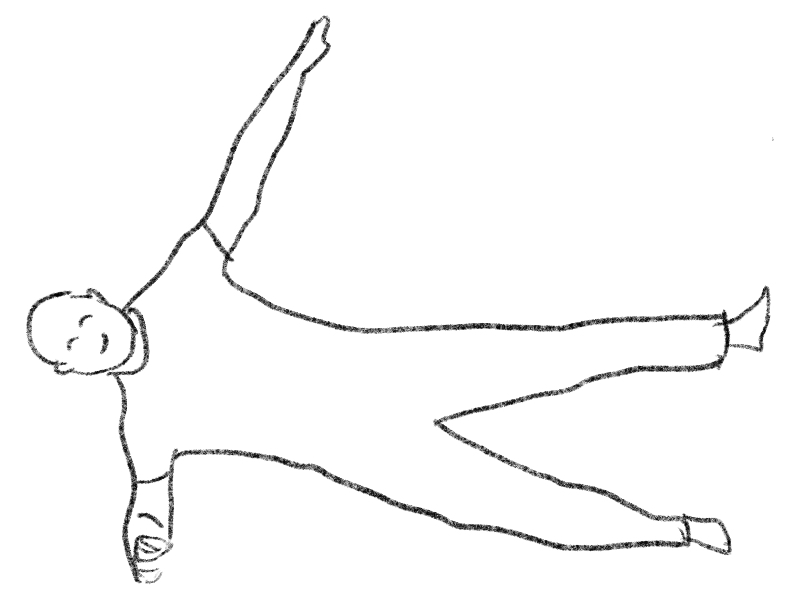
BENEFITS 益处
Strengthens core (especially obliques) and shoulder girdle stability; improves coordinated alignment of pelvis and scapulae; enhances lateral stability and control.
强化核心肌群(尤其是腹斜肌)和肩带稳定性;改善骨盆与肩胛的协调对位;提高身体侧向稳定性与控制能力。
TARGET MUSCLES 目标肌群
Internal/external obliques (primary lateral stabilizers), transversus abdominis (deep stabilizer), serratus anterior and lower trapezius (scapular stability), gluteus medius and TFL (top leg abduction), deltoid (supporting arm).
腹内斜肌、腹外斜肌(主导侧向稳定)、腹横肌(深层稳定)、前锯肌与下斜方肌(肩胛稳定)、臀中肌与阔筋膜张肌(上方腿外展)、三角肌(支撑臂)。
SETUP 设置
None.
无特殊器械调节。
CUES 口令
Starting position: Side-lying, bottom elbow on floor under shoulder. Legs straight together, supported on outer edge of bottom foot (ankle neutral). Spine neutral. Imagine head, ribs, sacrum, and heels touching an invisible wall. Breathing/Movement: Inhale, lengthen spine, prepare. Exhale, press bottom arm into floor, lift hips up, engaging underarm muscles. Inhale, hold side support. Exhale, lift top arm and/or top leg, body in star shape. Inhale, control arm/leg down. Exhale, lower hips to floor. Repeat 3-5x each side. Imagery: Body like a sturdy drawbridge, deck (trunk) level, tower (supporting arm) vertical; lifting limbs like a star radiating light.
起始位:侧卧,下方手肘撑地,手肘在肩正下方。双腿伸直并拢,用下方脚的外缘支撑(脚踝保持中立位)。脊椎保持中立位。想象头、肋骨、骶骨和脚跟靠在一面无形的墙上。 呼吸与动作:吸气,脊椎延伸,准备。吐气,下方手臂用力推地,将髋部向上抬起离地,收紧腋窝下方的肌肉群。吸气,在侧撑位置保持。吐气,上方手臂和/或上方腿抬起,身体呈星星形状。吸气,有控制地放下手臂和/或腿。吐气,将髋部放回地面。每侧重复3-5次。 想象提示:想象身体像一座稳固的吊桥,桥面(躯干)水平,桥塔(支撑臂)垂直坚固;抬高手腿时,像星星绽放光芒。
IMAGERY 意象
Direct: Feel bottom arm pressing into floor and lateral abdominals engaging to hold trunk. Indirect: Like a sturdy drawbridge, deck level, tower vertical. Space: Imagine body sandwiched between two glass plates, only able to extend upward. Feeling: Focus on stability of bottom arm, contraction of lateral abdominals, and long reach of top leg.
直接:感受下方手臂推地的力量和侧腹肌群收紧以维持躯干悬空的感觉。间接:像一座稳固的吊桥,桥面水平,桥塔垂直。空间:想象身体侧面被两块透明的玻璃板夹住,只能向上延伸。感觉:注意力放在下方支撑臂的稳定、侧腹肌群的收缩感以及上方腿向远延伸的感觉上。
TACTILE CUES 触觉提示
1. Lightly place hands on client's top hip, cue to stay level when lifting, avoid rolling. 2. Lightly touch bottom scapula, guide to stabilize and depress. 3. During top leg lift, lightly touch lateral thigh, cue engagement from lateral glute. 4. Lightly touch top hand fingertips, guide to reach long.
1. 双手轻放在练习者骨盆上方的髋部,提示其向上抬起时保持水平,避免前后滚动。2. 一手轻触其下方肩胛骨,引导其稳定下沉。3. 在上方腿抬起时,轻触其大腿外侧,引导其用臀部侧方发力。4. 轻触其上方手臂指尖,引导向远延伸。
PROGRESSION 进阶
1. Hold side support longer. 2. Lift both top arm and leg simultaneously and hold (full star). 3. While holding top leg lift, perform small circles.
1. 在侧撑位置保持更长时间。2. 上方手臂和腿同时抬起并保持(完整星星式)。3. 在上方腿抬起时进行小幅度画圈。
REGRESSION 退阶
1. Bend bottom knee for wider base. 2. Stagger feet (one forward, one back) to reduce lateral stability demand. 3. Lift only hips, omit arm/leg lifts.
1. 下方腿膝盖弯曲,增加支撑面。2. 双脚一前一后支撑,降低对侧向稳定的要求。3. 只抬起髋部,不进行手臂/腿的抬起。
COMMON ERRORS 常见错误
Chin jutting or cervical lateral flexion; trunk collapse (hip dropping); poor shoulder alignment, eg: shoulder forward or shrugging; trunk or pelvic rotation; foot supination or lateral malleolus touching floor.
下巴前伸或颈椎侧屈;躯干塌陷(髋部掉下);肩膀协调对位不良,如肩膀往前推或耸肩;躯干或骨盆旋转;脚旋后或脚踝外踝碰地。
PRECAUTIONS 注意事项
Caution for acute wrist, elbow, or shoulder injury. Avoid for acute lumbar disc herniation.
手腕、手肘或肩部急性损伤者慎做。腰椎间盘突出急性期者避免。