BENEFITS 益处
Increase abdominal strength and awareness; improve breath control and utilization; enhance core endurance; promote deep abdominal function and pelvic floor coordination.
增加腹肌力量与意识;改善呼吸的利用与控制;提高核心耐力;促进深层腹肌功能与骨盆底肌协调。
TARGET MUSCLES 目标肌群
Transversus abdominis (primary stabilizer), rectus abdominis (maintains curl), internal and external obliques (synergistic stability), hip flexors (maintain leg position), shoulder girdle stabilizers (arm pumping).
腹横肌(主要稳定)、腹直肌(维持卷起)、腹内斜肌与腹外斜肌(协同稳定)、髋屈肌(维持腿位)、肩带稳定肌群(手臂摆动)。
SETUP 设置
None. May place pillow under shoulder blades to assist thoracic flexion.
无。可在肩胛下方加枕头协助胸椎屈曲。
CUES 口令
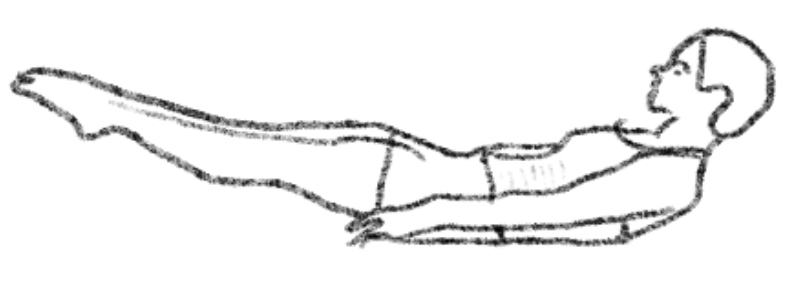
Starting position: Supine, legs lifted to tabletop (knees bent 90°), arms extended by sides, palms down. Breathing/Movement: Inhale, lengthen back of neck. Exhale, curl head, neck, and scapulae off mat, maintaining axial elongation. Simultaneously reach arms long along floor and lift them slightly, keeping lumbar spine on mat. Hold position, pump arms vigorously with small range. Inhale for 5 pumps; exhale for 5 pumps. Repeat 10 breath cycles (100 pumps total), then control roll down to start. Imagery: Arms like dragonfly wings, lightly and rhythmically tapping water; breath like tides, steadily and continuously flowing in and out of body.
起始位:仰卧,双腿抬起呈桌面姿势(膝盖弯曲90度),手臂在身体两侧延伸,手掌朝下。 呼吸与动作:吸气,颈部后侧延长。吐气,将头、颈与肩胛卷起离开垫子,保持中轴延伸。同时手臂沿着地板向远延伸并抬离地面,保持腰椎与地板接触。保持此姿势,手臂小幅度上下摆动。吸气,手臂拍打5次;吐气,手臂拍打5次。重复10组呼吸循环(共100次拍打),然后有控制地卷下回到起始位。 想象提示:想象手臂像蜻蜓翅膀,轻盈而有节奏地拍打水面;气息像潮汐,稳定而持续地进出身体。
IMAGERY 意象
Direct: Feel sustained contraction of abdominals and rhythmic pumping of arms. Indirect: Like a precise steam engine, breath as power, arms as flywheel. Space: Imagine ribcage like an accordion bellows, expanding and contracting evenly with breath. Feeling: Focus on gentle tightening of lower abdomen and expansion of posterior ribs.
直接:感受腹肌的持续收缩和手臂的节奏性拍打。间接:像一台精密的蒸汽机,呼吸是动力,手臂是飞轮。空间:想象胸腔如手风琴风箱,在呼吸中均匀扩张和收缩。感觉:注意力放在下腹部轻柔的收紧感和肋骨后侧的展开感上。
TACTILE CUES 触觉提示
1. Gently hold client's forearms, guide them to reach long and assist pumping rhythm. 2. Lightly touch lower abdomen, cue abdominals to draw in, avoid bulging. 3. Place hands on ASIS, cue to keep pelvis stable. 4. Lightly touch lower ribs, cue to expand on inhalation.
1. 双手轻握练习者前臂,引导其向远延伸并辅助拍打节奏。2. 轻触其下腹部,提示腹肌收紧,避免凸出。3. 手放在其髂前上棘,提示保持骨盆稳定。4. 轻触其下段肋骨,提示吸气时展开。
PROGRESSION 进阶
1. Gradually straighten legs, decreasing knee bend until legs are 3-5 inches off mat, increasing abdominal challenge. 2. Squeeze a ball or Pilates ring between calves. 3. Vary breath counts (eg: 3 or 8 counts). 4. Use percussive or intermittent breathing.
1. 逐渐将腿和髋伸直,减小膝盖弯曲角度,直至腿离地3-5英寸,增加对腹肌的挑战。2. 小腿夹球或普拉提圈。3. 改变呼吸拍数(如3拍或8拍)。4. 用叩击式或间歇式呼吸。
REGRESSION 退阶
1. Keep feet on floor. 2. Place pillow under shoulder blades to assist thoracic flexion. 3. Shorten breath cycles, reduce pumps or sets. 4. Hold behind thighs for assistance. 5. Place one or both hands behind head.
1. 双脚放在地板上。2. 肩胛下方加枕头协助胸椎屈曲。3. 缩短呼吸循环、减少拍数或组数。4. 手抓大腿后侧辅助稳定。5. 单手或双手放头后。
COMMON ERRORS 常见错误
Holding breath; rectus abdominis bulging (excessive intra-abdominal pressure); ribs or lower back lifting off mat; excessive neck tension; using accessory breathing or diaphragmatic breathing causing abdominal distension.
憋气;腹直肌凸出(腹内压过度);肋骨或下背离开地板;颈部过度用力;辅助式呼吸或腹式呼吸导致腹部胀大。
PRECAUTIONS 注意事项
For weak or unaware abdominals, keep legs bent. For spinal stenosis or disc conditions, keep legs bent. For osteoporosis or neck pain, elevate head with pillow. Contraindicated for acute spinal conditions.
腹肌无力、无意识者双腿弯曲练习。脊椎狭窄或椎间盘病症者双腿弯曲。骨质疏松或颈椎痛者用枕头把头垫高。急性脊椎病症者禁忌。