BENEFITS 益处
Strengthens scapular and humeral strength and awareness; improves thoracic strength and mobility; improves posture; enhances coordinated control of shoulder girdle and core.
强化肩胛和肱骨的力量与意识;改善胸椎力量与活动度;改善姿态;提高肩带与核心的协调控制能力。
TARGET MUSCLES 目标肌群
Rotator cuff (especially external rotators: infraspinatus, teres minor), posterior deltoid, serratus anterior and lower trapezius (scapular stability), erector spinae (thoracic) (maintain extension), transversus abdominis (core stability).
肩袖肌群(特别是冈下肌、小圆肌等肩外旋肌)、三角肌后束、前锯肌与下斜方肌(稳定肩胛)、竖脊肌(胸椎段)(维持伸展)、腹横肌(稳定核心)。
SETUP 设置
None. May practice on box or stacked mats to reduce demand on shoulder flexibility.
无。可在箱子或叠起的垫子上练习,减少对肩关节柔韧度的要求。
CUES 口令
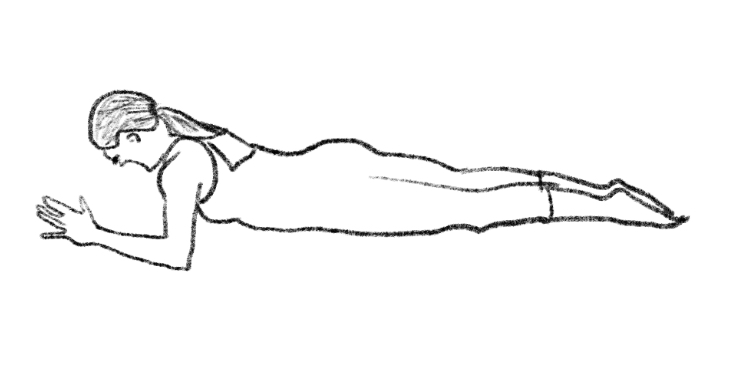
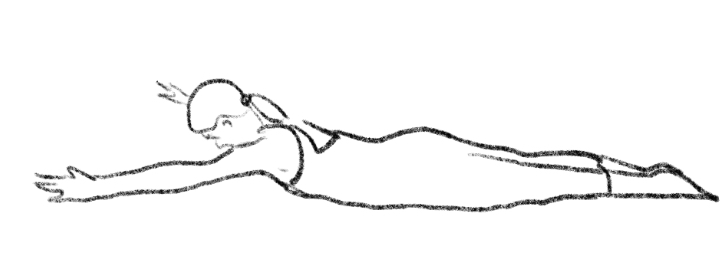
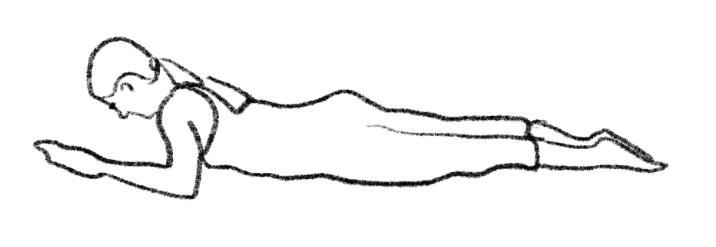
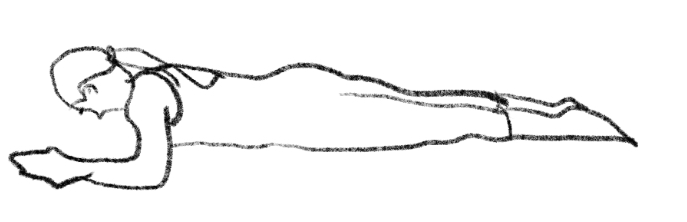
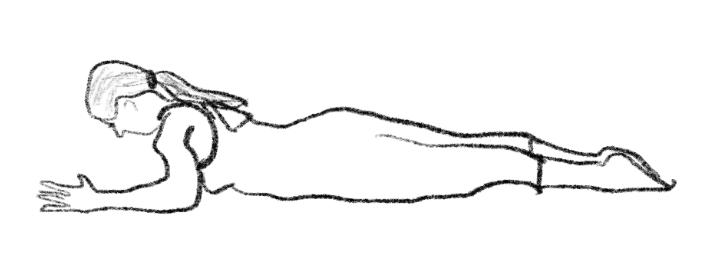
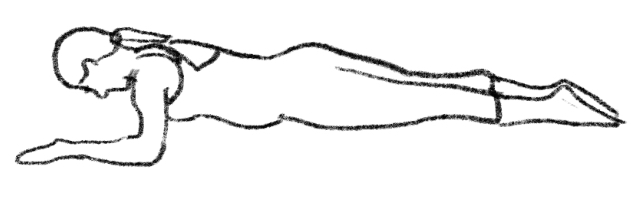
Starting position: Prone, arms in 'E' shape (shoulders abducted, elbows bent 90°, forearms toward head). Spine neutral, feet together. Head slightly lifted, aligned with spine. Breathing/Movement: Inhale, externally rotate arms, lift hands/forearms. Exhale, lift elbows, keeping hands higher. Inhale, extend thoracic spine, continue external rotation. Exhale, extend arms overhead, straight elbows, reaching diagonally up. Inhale, return arms to 'E' shape, maintaining body height. Exhale, control trunk roll down to mat, maintaining arm height. Elbows down, hands still higher, finally forearms down. Imagery: Arms like scarecrow limbs, clear angles and strength at joints; from elbow to fingertip, a long straight line reaching into distance.
起始位:俯卧,双臂摆成大写字母“E”的姿势(肩外展、肘屈90度,前臂指向头侧)。脊椎中立,双脚并拢。头微微离开地面,与脊椎对齐。 呼吸与动作:吸气,手臂外旋,将手与前臂抬离地面。吐气,将手肘抬起,保持手掌高于手肘。吸气,将胸椎伸展后仰,手臂继续外旋。吐气,手臂延伸过头,手肘伸直,向斜上方延伸。吸气,将手臂带回“E”姿势,保持身体高度。吐气,躯干有控制地卷回垫上,保持手臂高度。手肘落回垫子,手仍高于手肘,最后前臂落回。 想象提示:想象手臂像稻草人的胳膊,关节处有清晰的转折和力量;从手肘到指尖形成一条延长的直线,向远方延伸。
IMAGERY 意象
Direct: Feel rotator cuff externally rotating humerus. Indirect: Like a scarecrow standing in wind, joints stable and open. Space: Imagine ample space under armpits for arms to rotate freely. Feeling: Focus on scapulae depressing and sliding back, and the long line from elbow to fingertip.
直接:感受肩袖肌群将肱骨外旋的力量。间接:像稻草人迎风而立,关节稳固而舒展。空间:想象腋窝下方有足够的空间让手臂自由旋转。感觉:注意力集中在肩胛骨向后、向下沉的感觉,以及从手肘到指尖的延长线上。
TACTILE CUES 触觉提示
1. Lightly hold client's forearms near wrists, guide external rotation and keep hands higher than elbows. 2. Lightly touch medial border of scapulae, guide to depress and widen. 3. During thoracic extension, lightly touch lower ribs, cue to stay on mat. 4. Lightly touch elbows, cue to reach long.
1. 双手轻握练习者前臂近手腕处,引导其外旋并保持手高于肘。2. 轻触其肩胛骨内侧缘,引导其下沉并展开。3. 在胸椎伸展时,手指轻触其下段肋骨,提示保持贴地。4. 轻触其肘关节,提示保持向远延伸。
PROGRESSION 进阶
1. Choreograph multiple arm movements into a smooth sequence. 2. Add hip extension in extended position to challenge support.
1. 将多个手臂动作编排成流畅的序列。2. 在伸展位加入髋伸动作以增加支撑挑战。
REGRESSION 退阶
1. Perform only parts (eg: just arm external rotation lift). 2. Start with Prone Press Up. 3. Practice on box/stacked mats to reduce shoulder ROM demand. 4. Practice standing, back against wall, ribs on ball.
1. 只做部分动作(如仅练习手臂外旋抬离)。2. 从Prone Press Up开始建立基础。3. 在箱子或叠起的垫子上练习,减少肩关节活动范围要求。4. 用站姿练习,背靠墙,肋骨贴着球。
COMMON ERRORS 常见错误
Lack of external rotation; compensating with wrist extension; arm adduction; excessive cervical extension; scapular elevation; over-recruiting upper trapezius.
缺乏肩外旋;手腕伸展代偿;手臂内收;颈椎过度后仰伸展;肩胛骨上提;斜方肌上束过度募集。
PRECAUTIONS 注意事项
Caution or regress for subacromial impingement, severely limited shoulder ROM. Caution for spinal stenosis.
肩峰下撞击综合征、肩关节活动范围严重受限者慎做或降阶。脊椎狭窄症者需注意。