BENEFITS 益处
Improves posture; improves spinal flexion and return to neutral mobility; lengthens hamstrings; improves control of spinal articulation.
改善姿态;改善脊椎前屈与回到中立位置的活动度;延伸腘绳肌长度;提高脊椎分节运动的控制能力。
TARGET MUSCLES 目标肌群
Hamstrings (active stretch), erector spinae (eccentric flexion, concentric extension), abdominals (assist flexion and stability), multifidus (control articulation).
腘绳肌(主动拉伸)、竖脊肌(离心控制屈曲,向心控制伸展)、腹肌(辅助屈曲与稳定)、多裂肌(控制分节运动)。
SETUP 设置
None. May sit on mat, foam roller, or small box to help keep pelvis vertical.
无。可坐在垫子、泡沫轴或小盒子上,帮助骨盆保持垂直于地面。
CUES 口令
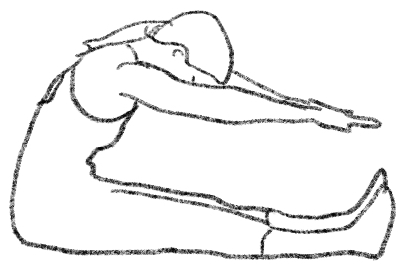
Starting position: Long sitting, legs straight together, spine and pelvis neutral. Arms extended forward, parallel to floor. Breathing/Movement: Inhale, lengthen spine up. Exhale, nod chin slightly, initiate from head, flex trunk forward, keeping pelvis vertical, spine curling segmentally like wallpaper peeling. Inhale, feel back of ribs fill, expanding. Exhale, draw abdominals in, articulate spine back up from tailbone, stacking vertebrae to start. Imagery: Spine like a string of pearls, dropping from top, stacking from bottom; pelvis like a stable foundation, still.
起始位:长坐姿势,双腿伸直并拢,脊椎和骨盆保持中立位。双臂向前延伸,平行于地板。 呼吸与动作:吸气,脊椎向上延伸。吐气,点头(下巴微收),从头部开始引导躯干向前屈曲,保持骨盆起始位置(垂直地面),脊椎像墙纸剥离墙面般逐节前弯。吸气,感受气体充满肋骨后侧,使肋骨展开。吐气,腹部向内收紧,从尾骨开始逐节向上回卷,将脊椎一节一节叠回起始姿势。 想象提示:想象脊椎像一串珍珠,从顶端开始逐颗垂落,再从底端开始逐颗堆叠;骨盆像稳固的基石,保持不动。
IMAGERY 意象
Direct: Feel spine like pearl necklace dropping and stacking segmentally. Indirect: Like wallpaper peeling inch by inch from wall. Space: Imagine anterior disc spaces compressing, posterior spaces opening during flexion. Feeling: Focus on oppositional pull of sit bones grounding down and crown reaching forward.
直接:感受脊椎像珍珠项链逐节垂落与堆叠。间接:像墙纸从墙面上一寸一寸地剥离。空间:想象脊椎屈曲时,椎体前侧空间被压缩,后侧空间被打开。感觉:注意力放在坐骨向下扎根和头顶向前延伸的对拉感上。
TACTILE CUES 触觉提示
1. During forward flexion, lightly touch thoracic spinous processes to guide articulation. 2. During return, lightly place hand on sacrum to guide initiation. 3. Lightly place hands on pelvis, cue to stay vertical, no rocking.
1. 在向前屈曲时,手指轻触练习者胸椎棘突,引导逐节前弯。2. 在回卷时,一手轻放在其骶骨,引导启动卷起。3. 双手轻放在其骨盆两侧,提示保持垂直于地面,避免前后晃动。
PROGRESSION 进阶
1. During forward stretch, raise arms parallel to floor. 2. Sit on unstable surface (eg: foam roller, small ball) to challenge pelvic alignment.
1. 向前拉伸时,手臂抬到平行于地面的姿势。2. 坐在不稳定的表面(如泡沫轴、小球)上,增加对骨盆排列的挑战。
REGRESSION 退阶
1. Press hands or legs into floor for assistance. 2. Sit against wall for proprioceptive feedback. 3. Bend knees to shorten lever and reduce hamstring stretch intensity.
1. 手或腿向下压地板,借助推力辅助完成动作。2. 靠墙坐,增加本体感觉反馈。3. 膝盖弯曲,缩短力臂,减轻对腘绳肌的拉伸强度。
COMMON ERRORS 常见错误
Hip flexion substituting spinal flexion (posterior pelvic tilt compensation); unable to maintain neutral pelvis in long sit; excessive cervical flexion; shoulder elevation or protraction; pelvic rocking; head dropping.
髋关节屈曲取代脊椎屈曲(骨盆后倾代偿);无法维持长坐姿的骨盆中立;颈椎过度前屈;肩膀过度上提或前引;骨盆前后晃动;头垂下来。
PRECAUTIONS 注意事项
Contraindicated for acute disc conditions, acute adverse neural tension. For disc conditions, practice in pain-free range, may bend knees. For osteoporosis, lean forward (hip hinge) not spinal flexion, may bend knees. For post-hip replacement (posterior approach), sit on chair or ball, keep hip flexion <90°.
急性椎间盘病症、急性有害的神经紧张者禁忌。椎间盘病症者在舒适的活动范围内练习,可屈膝。骨质疏松者向前平倾,不要前屈,可屈膝。髋关节置换术后(后入路)者坐在椅子或球上,保持髋屈角度不大于90度。