BENEFITS 益处
Strengthens thoracic extensors; improves shoulder mobility and arm strength; improves posture; strengthens posterior chain.
锻炼胸椎伸展后仰肌群;改善肩膀活动度以及手臂力量;改善姿态;强化背部后链。
TARGET MUSCLES 目标肌群
Erector spinae (especially thoracic) (primary extension), transversus abdominis and internal obliques (eccentric control to protect lumbar), rotator cuff and posterior deltoid (shoulder stability and arm movement), serratus anterior and lower trapezius (scapular stability).
竖脊肌(特别是胸椎段)(主导伸展)、腹横肌与腹内斜肌(离心控制以保护腰椎)、肩袖肌群与三角肌后束(稳定肩关节并参与手臂动作)、前锯肌与下斜方肌(稳定肩胛)。
SETUP 设置
None. May place towel or thin pillow under abdomen as needed.
无。可根据需要在腹部下方垫毛巾或薄枕。
CUES 口令
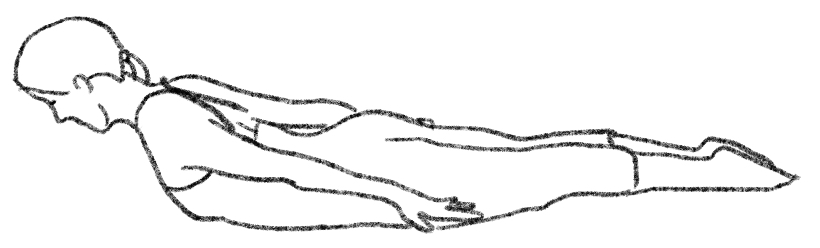
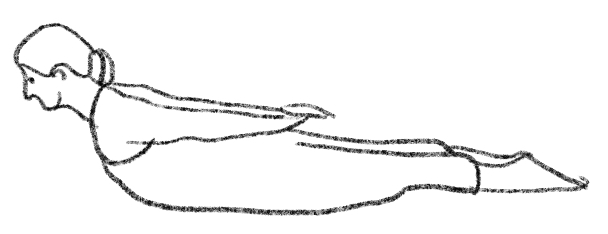
Starting position: Prone, arms extended out to sides parallel to floor, palms down. Humeral heads back, arms slightly lifted. Forehead lifted 3-5 cm from mat. Spine neutral, pubis lightly on mat. Breathing/Movement: Inhale, crown reaches long away from shoulders. Exhale, articulate thoracic spine into extension segmentally. Inhale at top, feel further extension. Exhale, maintain spinal length, control lowering thoracic spine segmentally. Keep lower ribs on mat throughout. May switch to inhale on extension. Imagery: Body like a light dart, reaching from crown to toes; thoracic spine opening like a chain segmentally.
起始位:俯卧,手臂向身体两侧延伸,平行于地板,手掌朝下。肱骨头向后,手臂微微抬离地面。前额轻轻离开垫子约3-5厘米。脊椎保持中立位,耻骨微微接触垫子。 呼吸与动作:吸气,头顶向远延伸,离开肩膀方向。吐气,将胸椎一节一节伸展后仰。在顶端吸气,感受胸椎进一步伸展。吐气,保持脊椎长度,将胸椎一节一节有控制地放下。全程保持下段肋骨与垫子的接触。可调整为伸展后仰时吸气。 想象提示:想象身体像一支轻巧的飞镖,从头顶到脚尖向远方延伸;胸椎像链条一样一节一节向上打开。
IMAGERY 意象
Direct: Feel thoracic spine opening segmentally. Indirect: Like a light dart, floating steadily in air. Space: Imagine space in front of chest and armpits gently widening. Feeling: Focus on lower ribs sinking into mat and gentle contraction of upper back muscles.
直接:感受胸椎一节一节向上打开。间接:像一支轻巧的飞镖,平稳地悬浮在空中。空间:想象胸前和腋窝的空间被柔和地拓宽。感觉:注意力放在下段肋骨沉向垫子的触感和上背部肌肉的温和收缩上。
TACTILE CUES 触觉提示
1. Lightly place hands on lower ribs, cue to stay on mat. 2. Lightly touch medial border of scapulae, guide to depress and widen. 3. During arm lifts, lightly touch lateral upper arm, guide to use shoulder strength without shrugging.
1. 双手轻放在练习者下段肋骨两侧,提示保持贴地。2. 轻触其肩胛骨内侧缘,引导其向下沉并展开。3. 在手臂上抬时,轻触其上臂外侧,引导其用肩部力量而非耸肩。
PROGRESSION 进阶
1. Hold thoracic extension, press arms toward ceiling 3-5x slow arm pulses (exhale on press). 2. Lift legs (without increasing lumbar extension). 3. Arm pulses like prone Hundreds.
1. 保持胸椎伸展后仰姿势,将手臂向天花板方向上压,重复3-5次慢速手臂摆动(手臂上压时吐气)。2. 抬起双腿(注意不可增加腰椎后仰伸展角度)。3. 手臂摆动像做俯卧的Hundreds。
REGRESSION 退阶
1. Reduce arm lift angle. 2. Reduce number of arm pulses. 3. Place pillow under abdomen to keep spine long or slightly flexed.
1. 减少手臂上抬的角度。2. 减少手臂上抬的次数。3. 在腹部下方垫枕头,让脊椎保持长度或微屈。
COMMON ERRORS 常见错误
Excessive lumbar or cervical extension (compression); over-recruiting glutes; feet lifting off mat; excessive scapular retraction/adduction; humeral head shifting forward.
腰椎或颈椎过度后仰伸展(挤压);臀肌过度用力募集;双脚浮起离开垫子;肩胛过度后缩夹紧;肱骨头向前位移。
PRECAUTIONS 注意事项
Contraindicated for pregnancy, acute spinal stenosis, acute facet syndrome. For shoulder injury, modify arm/hand position to comfortable (eg: palms up). For chronic spinal stenosis, place pillow under abdomen. For osteoporosis, place pad under lower ribs.
怀孕、急性椎管狭窄、急性小面关节综合征者禁忌。肩膀受伤者可改变手和手臂位置到感觉舒服的姿势(如手掌朝上)。慢性脊椎狭窄症者在腹部下垫枕头。骨质疏松症者可在下段肋骨下面加垫子。