BENEFITS 益处
Improves thoracic and rib extension mobility; improves width of chest and front of shoulders; improves posture; improves ability of abdominal wall to contract correctly during spinal extension.
改善胸椎与肋骨后仰伸展的活动度;改善胸与肩前侧的宽度;改善姿态;改善在脊椎后仰伸展时,腹壁能正确收缩的能力。
TARGET MUSCLES 目标肌群
Erector spinae (especially thoracic) (primary extension), transversus abdominis and internal obliques (eccentric control to protect lumbar), serratus anterior and lower trapezius (scapular stability), rotator cuff (shoulder stability).
竖脊肌(特别是胸椎段)(主导伸展)、腹横肌与腹内斜肌(离心控制以保护腰椎)、前锯肌与下斜方肌(稳定肩胛)、肩袖肌群(稳定肩关节)。
SETUP 设置
None. May place towel under forehead as needed.
无。可根据需要在前额下方垫毛巾。
CUES 口令
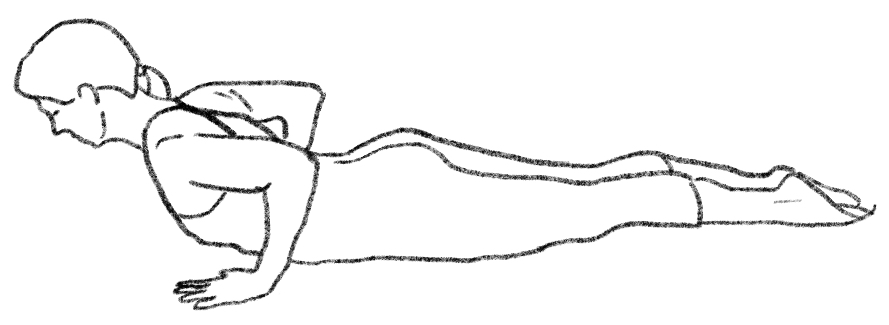
Starting position: Prone, hands on floor under shoulders, elbows pointing up. Forehead on mat/towel or slightly lifted. Breathing/Movement: Inhale, widen clavicles. Exhale, intention from elbows toward heels, initiate curl, depress scapulae, open front of shoulders. Lift sternum, extend thoracic spine. Keep lower ribs on mat, humeral head in socket. Inhale, control roll down to start, keeping back of neck long. May switch breath pattern. Imagery: Sternum like a submarine periscope, slowly rising from water; elbows like anchors sinking toward feet, pulling body up.
起始位:俯卧,手掌撑地在肩膀旁侧,手肘朝向天花板。前额轻触垫子、毛巾上或微微离开地面。 呼吸与动作:吸气,锁骨向两侧放宽。吐气,意念从手肘向脚跟方向延伸,启动卷起动作,肩胛骨向下沉,肩膀前方展开。让胸骨抬起来,胸椎后仰伸展。保持下段肋骨贴在垫子上,肱骨头在关节窝内。吸气,有控制地向下卷回起始位置,保持颈部后侧延长。可交换吸气与吐气模式。 想象提示:想象胸骨像潜水艇的指挥塔,缓缓从水面升起;手肘像锚一样向脚的方向沉,将身体拉起来。
IMAGERY 意象
Direct: Feel thoracic vertebrae opening back and up segmentally. Indirect: Like a flower bud slowly blooming in morning light. Space: Imagine more space created in front of chest and armpits. Feeling: Focus on stable contact of lower ribs on mat and contraction of upper back muscles.
直接:感受胸椎一节一节地向后上方打开。间接:像一朵花蕾在晨光中缓缓绽放。空间:想象胸前和腋窝有更多的空间被创造出来。感觉:注意力放在下段肋骨稳稳贴地的触感和上背部肌肉的收缩感上。
TACTILE CUES 触觉提示
1. Lightly place hands on medial border of scapulae, guide to depress. 2. Lightly touch lower ribs, cue to stay on mat. 3. During extension, lightly touch thoracic spinous processes to guide segmental extension of upper thoracic.
1. 双手轻放在练习者肩胛骨内侧缘,引导其向下沉。2. 轻触其下段肋骨两侧,提示保持贴地。3. 在伸展时,手指轻触其胸椎棘突,引导上胸椎的分节伸展。
PROGRESSION 进阶
During extension, lift hands off floor, arms extended by sides, open to sides, or overhead.
在做躯干后仰伸展时,让手离开地面,手臂在躯干与腿的两边延伸、在两侧打开或伸直过头。
REGRESSION 退阶
Reduce range of motion. Place pillow under abdomen to keep spine long or slightly flexed.
减小活动范围。在腹部下方垫枕头,让脊椎保持长度或微屈。
COMMON ERRORS 常见错误
Ribs lifting without thoracic extension (lumbar compensation); ribs lifting with thoracic flexion; shrugging; abdominal collapse; hip flexion (anterior pelvic tilt).
肋骨抬离垫子时,胸椎未有后仰伸展(而是腰椎代偿);肋骨抬起时胸椎前屈;耸肩;腹部塌陷;髋部屈曲(骨盆前倾)。
PRECAUTIONS 注意事项
Contraindicated for pregnancy, acute spinal stenosis, acute facet syndrome. For shoulder injury, modify arm/hand position to comfortable (eg: arms in 'W' shape). For chronic spinal stenosis, place pillow under abdomen. For osteoporosis, place pad under lower ribs.
怀孕、急性椎管狭窄、急性小面关节综合征者禁忌。肩膀受伤者可改变手和手臂位置到感觉舒服的姿势(如手臂呈大写英文字母“E”的姿势)。慢性脊椎狭窄症者在腹部下垫枕头。骨质疏松症者可在下段肋骨下面加垫子。