BENEFITS 益处
Increases spinal mobility and abdominal strength; improves hip flexor length; develops control of spinal articulation.
增加脊椎活动度与腹肌的力量;改善髋屈肌群长度;学习脊椎分节卷动的控制能力。
TARGET MUSCLES 目标肌群
Rectus abdominis (primary curl), transversus abdominis and internal obliques (core stability), hip flexors (assist curl), spinal extensors (eccentric control on lowering).
腹直肌(主导卷起)、腹横肌与腹内斜肌(稳定核心)、髋屈肌(辅助卷起)、脊柱伸肌(离心控制下放)。
SETUP 设置
No special equipment needed.
无特殊器械调节。
CUES 口令
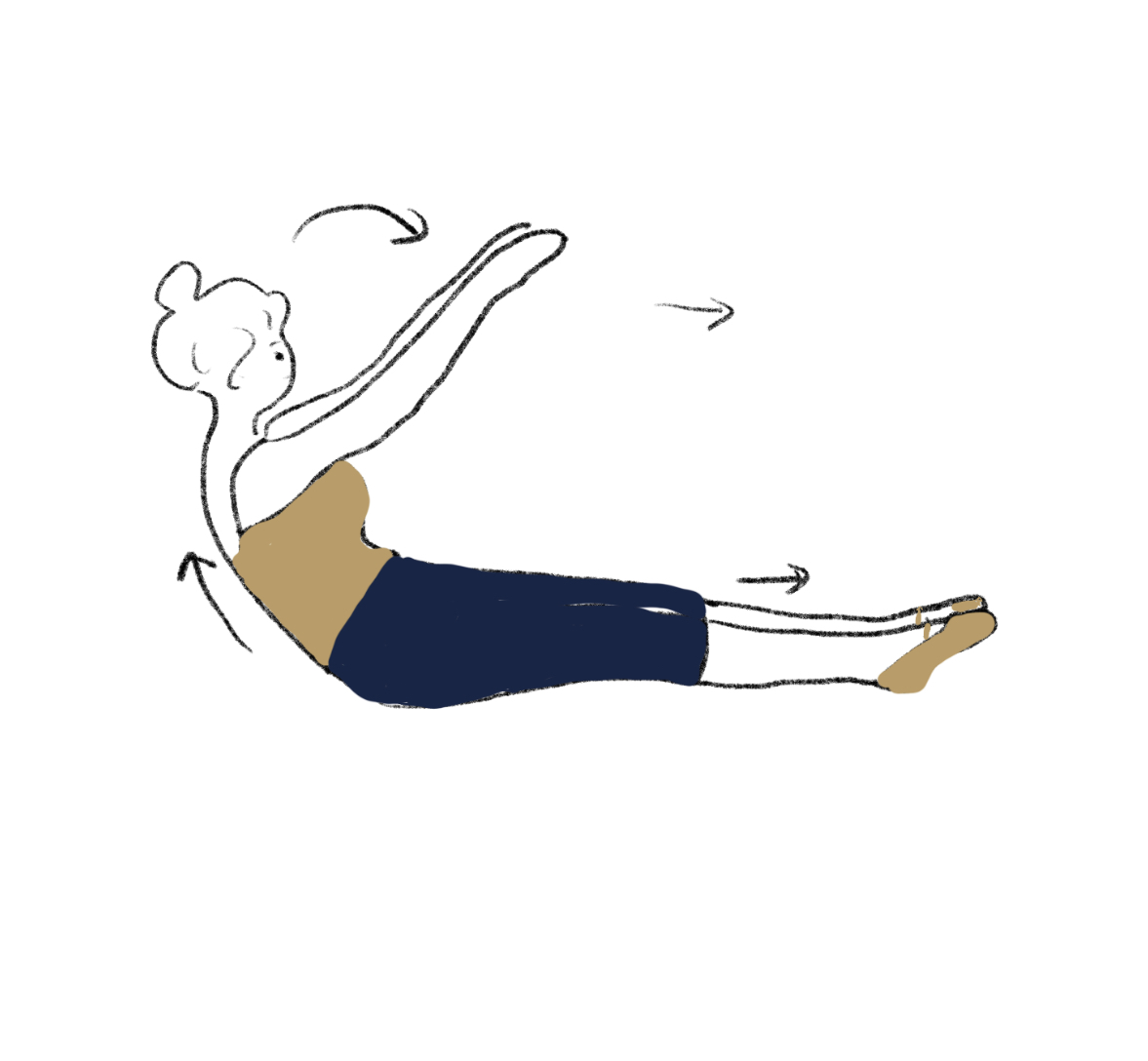
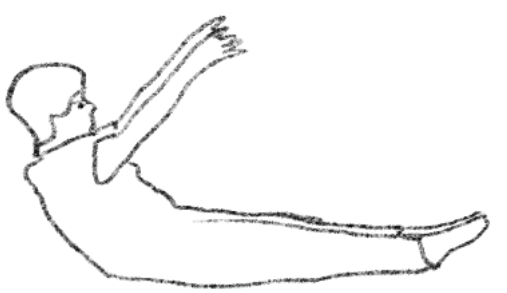
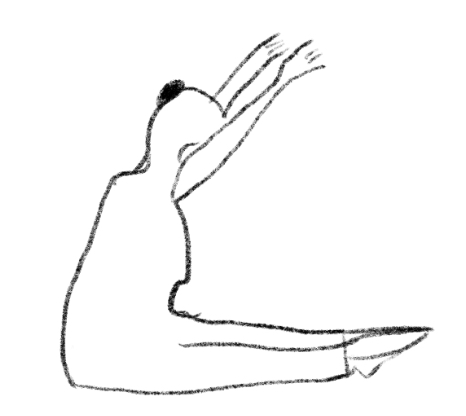
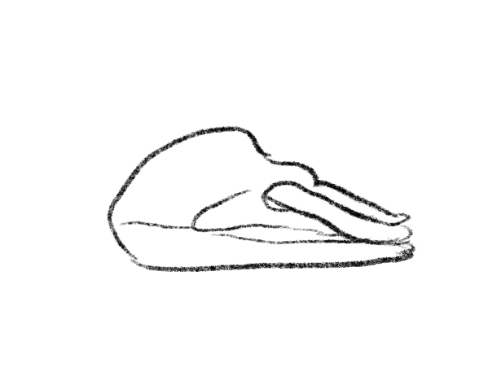
Starting position: Supine, legs straight together, arms extended overhead. Breathing/Movement: Inhale, reach arms and trunk long, avoid pressing low back into mat. Exhale, lift arms toward ceiling. Inhale, simultaneously curl upper body to chest lift. Exhale, continue curling spine segmentally until body folds forward, arms parallel to floor. Inhale, articulate spine up from sacrum to sitting tall. Exhale, simultaneously roll spine down from pelvis segmentally to start. Inhale, arms float overhead. Imagery: Spine like a string of pearls, lifted and lowered by thread from tailbone; body like a carpet slowly rolling and unrolling.
起始位:仰卧,双腿伸直并拢,手臂向后伸直举过头顶。 呼吸与动作:吸气,手臂和躯干向远延伸,避免下背压向垫子。吐气,手臂向天花板方向举起。吸气,同时将上半身卷起到胸部抬起的位置。吐气,脊椎一次一节继续向上卷起,直至整个身体向前弯曲,双手平行于地板。吸气,从骶骨开始向上逐节伸展脊椎,直至坐直。吐气,同时从骨盆开始向后逐节卷下,回到起始位置。吸气,手臂轻轻举过头顶。 想象提示:想象脊椎像一串珍珠,被一根线从尾骨端逐节提起,再逐节放回;身体像一张被缓缓卷起和铺开的地毯。
IMAGERY 意象
Direct: Feel abdominals peeling spine off mat segmentally. Indirect: Like a carpet slowly rolling and unrolling. Space: Imagine spaces between vertebrae evenly created and compressed during roll. Feeling: Focus on sequence initiated by sacrum and deep abdominal control.
直接:感受腹肌将脊椎一节节从垫子上剥离的感觉。间接:像一张被缓缓卷起和铺开的地毯。空间:想象脊椎在卷动时,椎体之间的空间被均匀地创造和压缩。感觉:注意力放在骶骨启动卷起的顺序感和腹部深度收缩的控制感上。
TACTILE CUES 触觉提示
1. During curl up, gently support back of head, lightly touch sacrum, guide articulation from head to tail. 2. During roll down, lightly touch thoracic spinous processes, guide segmental lowering from thoracic. 3. Lightly place hands on ASIS, cue pelvis to move between vertical and horizontal, avoid excessive posterior tilt.
1. 在卷起时,一手轻托练习者后脑勺,一手轻触其骶骨,引导从头到尾的逐节卷动。2. 在卷下时,手指轻触其胸椎棘突,引导从胸椎开始逐节下落。3. 双手轻放在其髂前上棘,提示骨盆保持在垂直与水平面之间运动,避免过度后倾。
PROGRESSION 进阶
1. Keep arms overhead throughout. 2. Perform on foam roller.
1. 在整个卷起和卷下过程中保持手臂举过头顶。2. 在泡沫轴上完成动作。
REGRESSION 退阶
1. Use spring assistance (eg: Trapeze Table). 2. Hold Pilates ring or bar for proprioceptive feedback. 3. Place hands behind knees for assistance. 4. Place hands behind head, elbows open or together, to shorten lever.
1. 使用弹簧(如秋千床)辅助。2. 手握普拉提圈或传力杆,提供本体感觉反馈。3. 手放在膝盖后方辅助完成。4. 将手放在头部后方,手肘打开或往前合拢,缩短力臂。
COMMON ERRORS 常见错误
Overusing rectus abdominis or hip flexors (using lower back); poor articulation, lifting as rigid unit; excessive posterior tilt beyond horizontal; chin jutting; scapular protraction or elevation; using momentum.
过度使用腹直肌或髋屈肌群力量(腰部发力);脊椎分节活动不佳,整体僵硬地抬起;骨盆过度后倾,超过水平面;下巴前突;肩胛前引或上提;用动量/冲力完成动作。
PRECAUTIONS 注意事项
Contraindicated for acute disc conditions, acute cervical conditions, osteoporosis. During pregnancy, use assisted variation or partial roll back. For chronic disc conditions, assist as needed. For thoracic stiffness, use assisted variation or spring assistance on Trapeze Table.
急性椎间盘病症、急性颈椎病症、骨质疏松症者禁忌。怀孕期间可用辅助变化或只做部分后卷动作。慢性椎间盘病症者按需求给予辅助。胸椎僵硬者可用辅助变化或在秋千床上用弹簧辅助。