BENEFITS 益处
Improves hip dissociation (eg: sit to stand); enhances trunk control and stability during single-leg abduction/adduction.
改善髋关节解离动作(如从坐姿到站姿);提高躯干在单腿外展/内收时的控制能力与稳定性。
TARGET MUSCLES 目标肌群
Transversus abdominis (primary deep stabilizer), internal obliques, multifidus (maintain neutral spine), hip abductors (gluteus medius, TFL, etc. control leg opening), hip adductors (control leg closing).
腹横肌(主要深层稳定)、腹内斜肌、多裂肌(维持脊椎中立)、髋外展肌群(臀中肌、阔筋膜张肌等控制腿打开)、髋内收肌群(控制腿收回)。
SETUP 设置
None
无
CUES 口令
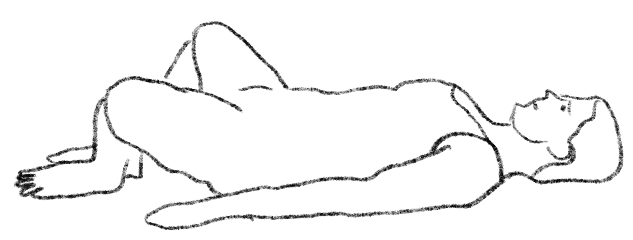
Starting position: Supine, knees bent, feet flat, hip-width or together. Spine neutral. Arms by sides, palms up/down. Breathing/Movement: Inhale, lengthen spine. Exhale, keeping pelvis and spine completely stable, open one leg into abduction, outer edge of foot staying in contact with floor. Inhale, control leg back to center. Repeat other side. May switch breath (open on inhale, close on exhale) for challenge. Imagery: Pelvis like a stable bowl, water still even as leg moves; leg like a door slowly opening and closing, hinge (hip) moving smoothly.
起始位:仰卧,膝盖弯曲,双脚平放地面,与髋同宽或并拢。脊椎中立。手臂放于身体两侧,手心朝上或朝下。 呼吸与动作:吸气,脊椎向上延伸。吐气,保持骨盆和脊椎完全稳定,将一侧腿向外展方向打开,脚的边缘保持与地面接触。吸气,有控制地将该侧腿带回中间。换边重复。必要时可交换呼吸方式(打开时吸气,收回时吐气)以增加挑战。 想象提示:想象骨盆是稳固的碗,无论腿如何移动,碗里的水都保持平静;腿像一扇缓慢打开又关上的门,铰链(髋关节)运转流畅。
IMAGERY 意象
Direct: Feel femoral head rotate smoothly in socket, lateral abdominals maintaining stability. Indirect: Like a door opening and closing smoothly. Space: Imagine hip capsule slightly compressed anteriorly, opening posteriorly during abduction. Feeling: Focus on stable sacral contact and heavy sinking of support-side hip.
直接:感受股骨头在髋臼中顺滑转动,侧腹肌群维持稳定。间接:像一扇平稳开启和关闭的门。空间:想象髋关节囊在打开时前侧空间略微压缩,后侧空间打开。感觉:注意力放在骶骨与垫子的稳定接触,以及支撑侧髋部沉重下压的感觉上。
TACTILE CUES 触觉提示
1. Lightly place hands on ASIS, cue to keep pelvis level, avoid rotation/tilt. 2. Lightly touch lower abdomen, cue core engagement to maintain neutral. 3. During leg opening, lightly touch lateral thigh, guide initiation from hip, not trunk.
1. 双手轻放在练习者髂前上棘,提示其保持骨盆水平,避免旋转或倾斜。2. 轻触其下腹部,提示腹肌收紧以维持中立。3. 在腿打开时,轻触其大腿外侧,引导其用髋部发力而非躯干。
PROGRESSION 进阶
1. Perform with legs in tabletop (lifted). 2. Open and close both legs simultaneously. 3. Perform on foam roller.
1. 将双脚抬至空中(桌面式)完成开合动作。2. 双腿同时向外打开与收回。3. 在泡沫轴上完成动作。
REGRESSION 退阶
1. Allow slight pelvis/spine movement in same direction to reduce core isolation demand. 2. Reduce leg opening range.
1. 允许骨盆与脊椎跟随腿部有轻微的同向运动,减少对核心孤立的要求。2. 减小腿部打开的活动范围。
COMMON ERRORS 常见错误
Failure to maintain axial length (chin up, spine arching, ribs lifting); pelvis not neutral; opposite foot moving (lifting/sliding); poor eccentric control during return; spinal/pelvic rotation; body moving with leg.
未能维持中轴长度(如下巴抬高、脊椎后仰、肋骨提高);骨盆未能维持中立位;对侧脚产生动作(如抬起或滑动);腿部离心收回时控制差;脊椎或骨盆出现旋转;腿动时身体也跟着动。
PRECAUTIONS 注意事项
In late pregnancy, elevate upper body with pillow/wedge. No absolute contraindications.
怀孕后期可用枕头或楔形枕垫高上半身进行。无绝对禁忌症。