BENEFITS 益处
Improves multi-directional hip mobility; stretches posterior, lateral, and anterior chains of lower limb and fascia; enhances core stability and balance; improves postural control and neuromuscular coordination.
提高髋关节多方向活动度;拉伸下肢后侧、外侧、前侧链肌群与筋膜;增强核心稳定性与平衡能力;改善姿势控制与神经肌肉协调。
TARGET MUSCLES 目标肌群
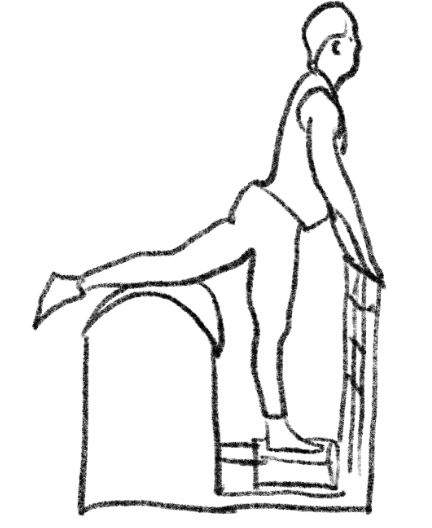
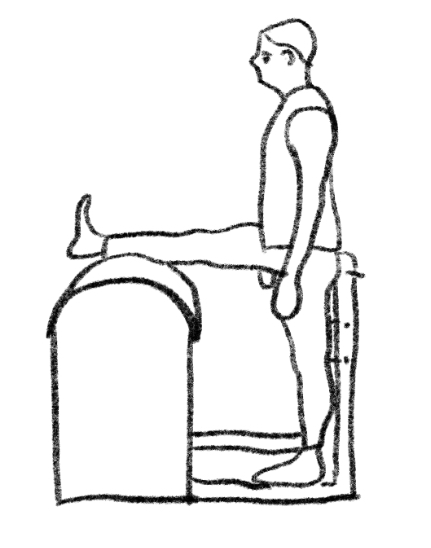
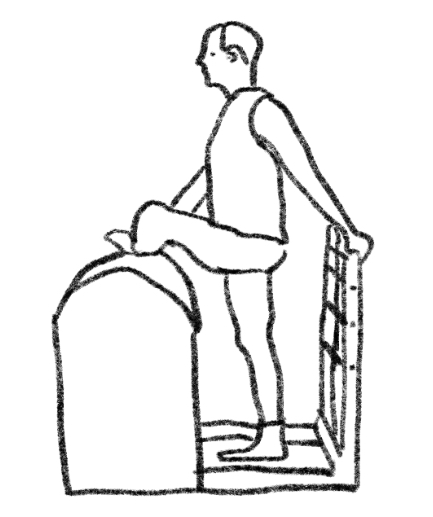
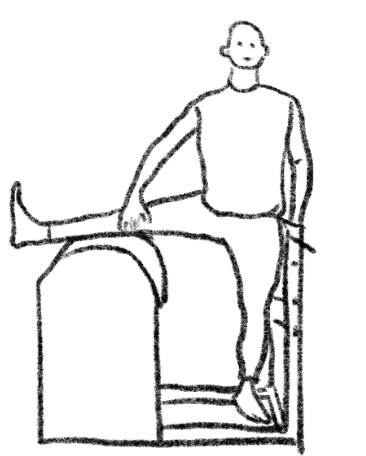
Facing forward: primarily stretches hamstrings and triceps surae of stance leg; dynamically stretches hip flexors. Side-lying: primarily stretches adductors, obliques, quadratus lumborum of stance leg. Back-facing (leg straight): primarily stretches quadriceps and iliopsoas of stance leg. Back-facing (leg bent): deeply stretches quadriceps (especially rectus femoris) and iliopsoas of stance leg. All variations require strong core stabilizers (transversus abdominis, multifidus, etc.) and stabilizers of the stance leg.
面向前:主要拉伸支撑腿的腘绳肌、小腿三头肌;动态拉伸屈髋肌群。侧向:主要拉伸支撑腿的内收肌群、腹斜肌、腰方肌。背向(腿伸直):主要拉伸支撑腿的股四头肌、髂腰肌。背向(腿弯曲):深度拉伸支撑腿的股四头肌(特别是股直肌)和髂腰肌。所有变体均需要强大的核心稳定肌群(腹横肌、多裂肌等)和支撑腿的稳定性肌群参与。
SETUP 设置
1. Ensure all parts of ladder barrel are securely locked. 2. For 'facing forward' and 'side-lying' variations, based on client's height and flexibility, may need to place a small box or platform under the foot to ensure pelvis and spine are neutral at start. 3. 'Back-facing' variations usually require no additional lift.
1. 确保阶梯圆桶所有部件牢固锁定。2. 根据练习者身高与柔韧性,在“面向前”与“侧向”变体中,可能需要在脚下垫一个小盒子或大箱子,以确保起始时骨盆与脊椎处于中立位。3. “背向”变体通常无需额外垫高。
CUES 口令
Starting position (common principles): Pelvis and spine neutral, stance leg stable, weight evenly distributed on foot. Facing forward: Stand between barrel and ladder, sacrum or back of thighs lightly touching ladder, facing barrel. Place one leg (straight or bent, externally rotated) on barrel. Inhale, lengthen trunk upward; Exhale, maintain axial elongation, fold forward from hips, feeling stretch in back leg; Inhale hold/adjust, Exhale control return. Side-lying: Stand sideways between barrel and ladder, hip or side of thigh near ladder lightly touching ladder. Abduct one leg onto barrel, opposite hand hold top rung. Inhale lengthen up; Exhale, perform pure lateral flexion toward barrel, avoid rotation; Inhale hold, Exhale return. Back-facing (leg straight): Face away from barrel/ladder, place one leg straight on barrel, hands hold top rung. Inhale prepare; Exhale, slide body weight back, feeling stretch in front of stance thigh; Inhale, use arms to pull body back to start. Back-facing (leg bent): Face away, one leg bent, foot and shin against barrel. Inhale prepare; Exhale, gently press knee toward floor while slowly pushing hips forward, deepening quadriceps stretch in stance leg; Inhale control, Exhale return. Imagery: Facing forward - fold from hips like a hinge. Side-lying - body bends sideways between two glass panels. Back-facing - imagine stance leg lengthening.
起始位(共同原则):骨盆与脊椎处于中立位,支撑腿稳定,重心均匀分布在脚掌。 面向前:站在圆桶与阶梯之间,骶骨或大腿后侧轻靠阶梯,面朝圆桶。一腿伸直或弯曲外旋放于圆桶上。吸气,躯干向上延伸;吐气,保持中轴延伸,从髋关节开始向前屈曲,感受后方腿的拉伸;吸气保持或微调,吐气有控制地回到起始位。 侧向:侧立于圆桶与阶梯之间,靠近阶梯侧的髋部或大腿侧面轻靠阶梯。一腿外展放于圆桶上,对侧手抓握阶梯顶层。吸气向上延伸;吐气,向圆桶方向做纯粹的侧屈,避免旋转;吸气保持,吐气回正。 背向(腿伸直):面朝后方站在圆桶与阶梯之间,一腿伸直放于圆桶上,双手抓握阶梯顶层。吸气准备;吐气,将身体重心向后滑动,感受支撑腿大腿前侧的拉伸;吸气,用手臂将身体拉回起始位。 背向(腿弯曲):面朝后方,一腿弯曲,脚和胫骨抵住圆桶。吸气准备;吐气,膝盖柔和地压向地板方向,同时髋部缓慢向前推送,加深支撑腿股四头肌的拉伸;吸气控制,吐气返回。 想象提示:面向前-想象像铰链一样从髋部折叠。侧向-想象身体在两片玻璃板之间侧弯。背向-想象支撑腿像被拉长。
IMAGERY 意象
【Direct】Alignment: Anchor the supporting heel firmly into the floor, maintaining a vertical weight-bearing axis. Pelvic Control: On exhale, ensure both sit bones remain horizontal, avoiding upward compensation of the working hip. Dissociation: Guide the femur to rotate precisely within the acetabulum, ensuring no excess pelvic rotation or tilting. 【Indirect】Deep Ground Stake: Imagine your supporting leg is a stable stake driven deep into the earth, providing an immovable pivot. Precision Spirit Level: View your pelvis as a precise spirit level; no matter how the stretching leg moves, the central bubble remains perfectly still. Telescopic Lens: The stretching leg is like a telescopic lens, sliding out smoothly and steadily while the base remains absolutely stationary. 【Space】Invisible Laser Beam: Imagine your heel projecting an invisible laser toward the wall far behind the barrel, tracing an ultimate straight line in space. Filling the Shadowed Space: On inhale, let respiratory energy fill the shadow beneath the barrel, maximizing your vertical span in space. Distant Parabola: During the forward fold, project your sternum toward the distant horizon, letting the spine trace an infinitely far-reaching parabola. 【Feeling】Gravitational Magnet (Tactile/Kinesthetic): Feel the barrel surface as a powerful magnet, steadily attracting and calibrating your limb alignment to the optimal track. Heavy Mist Resistance (Kinesthetic): Imagine the air as a thick, heavy mist; every movement requires pushing through layers of resistance for a smooth, controlled quality. Flowing Sand Balance (Tactile): Feel a layer of flowing fine sand between your sole and the barrel; you must use precise pressure to keep every grain of sand perfectly still during the stretch.
【直接】排列要求:将支撑脚脚跟牢牢锚定在地板上,保持下肢垂直负重轴线。骨盆控制:呼气时,确保双侧坐骨水平,避免抬腿侧髋部向上代伸。解离机制:引导股骨在髋臼窝内精准转动,确保骨盆不产生多余旋转。【间接】稳固的地桩:想象支撑腿是一根深埋地下的地桩,在大地深处扎根,提供不可撼动的支点。精密水平仪:视骨盆为一个精密的水平仪,无论拉伸腿如何移动,中心的小气泡始终纹丝不动。伸缩镜筒:拉伸腿像望远镜的伸缩镜筒,向外平滑顺畅地滑出,而底座保持绝对静止。【空间】无形激光束:想象脚跟向桶身正后方的墙壁发射一道激光,在空间中拉出极致直线。填满阴影空间:吸气时,让呼吸能量填满梯桶下方的阴影空间,在垂直维度占据最大跨度。深远抛物线:俯身前弯时,将胸骨投射向遥远的地平线,脊柱在空间中勾勒出无限深远的抛物线。【感觉】带有引力的磁铁(触觉/动觉):感受桶面如同一块带有引力的磁铁,平稳吸引并校准下肢对位,使其贴合最佳轨迹。厚重浓雾的阻力(动觉):想象空气如同厚重浓雾,每一次移动都需要平稳推开阻力,确保动作丝滑受控。流动细沙的平衡(触觉):感觉脚掌与桶面间覆盖着一层流动的细沙,必须通过精准受力保持沙粒静止。
TACTILE CUES 触觉提示
1. Lightly touch stance hip, cue to stay stable and neutral. 2. During lateral flexion, lightly touch upper waistline, guide to lengthen away. 3. In back-facing variations, lightly touch ankle or shin of lifted leg, cue to reach away to deepen stretch.
1. 轻触支撑腿的髋部,提示其保持稳定和中立。 2. 在侧屈时,轻触上侧腰线,引导其向远延伸。 3. 在背向变体中,轻触抬起腿的脚踝或小腿,提示向远延伸以加深拉伸。
PROGRESSION 进阶
Reduce arm support (e.g., hands on hips or reaching up); increase range or hold time; add slight trunk rotation from stable base (facing forward and side-lying variations only).
减少手臂支撑(如手放在髋部或向上伸展);增加动作幅度或保持时间;在稳定的基础上加入轻微的躯干旋转(仅限面向前和侧向变体)。
REGRESSION 退阶
All variations: reduce range of motion. Facing forward/side-lying: increase height under foot; hold ladder with both hands for more support. Back-facing: hold lower rung to shorten lever arm, reduce intensity.
所有变体:减小动作幅度。面向前/侧向:增加脚下垫高高度;双手扶阶梯以获得更多支撑。背向:手抓握更低一级阶梯以缩短力臂,减小强度。
COMMON ERRORS 常见错误
Excessive hip rotation or hiking (loss of neutral); trunk not neutral at start (e.g., leaning forward/back); stance knee hyperextension; trunk rotation instead of pure lateral flexion in side-lying variation; excessive lumbar lordosis (sagging) or rib flaring in back-facing variations; breath holding.
髋部过度旋转或上提(失去中立);躯干起始位不在中立位(如前倾或后仰);支撑腿膝盖超伸;侧向变体中出现躯干旋转而非纯粹侧屈;背向变体中腰椎过度前凸(塌腰)或肋骨外翻;呼吸憋气。
PRECAUTIONS 注意事项
Caution or avoid post-hip replacement, acute severe disc herniation, severe osteoporosis; pregnant women need professional guidance to modify (avoid over-stretching). Caution for back-facing variations (head below heart) with hypertension.
髋关节置换术后、严重腰椎间盘突出急性期、严重骨质疏松者应谨慎或避免;孕期女性需在专业指导下调整(避免过度拉伸)。高血压患者在进行背向变体(头低于心脏)时需谨慎。